Direct Answer
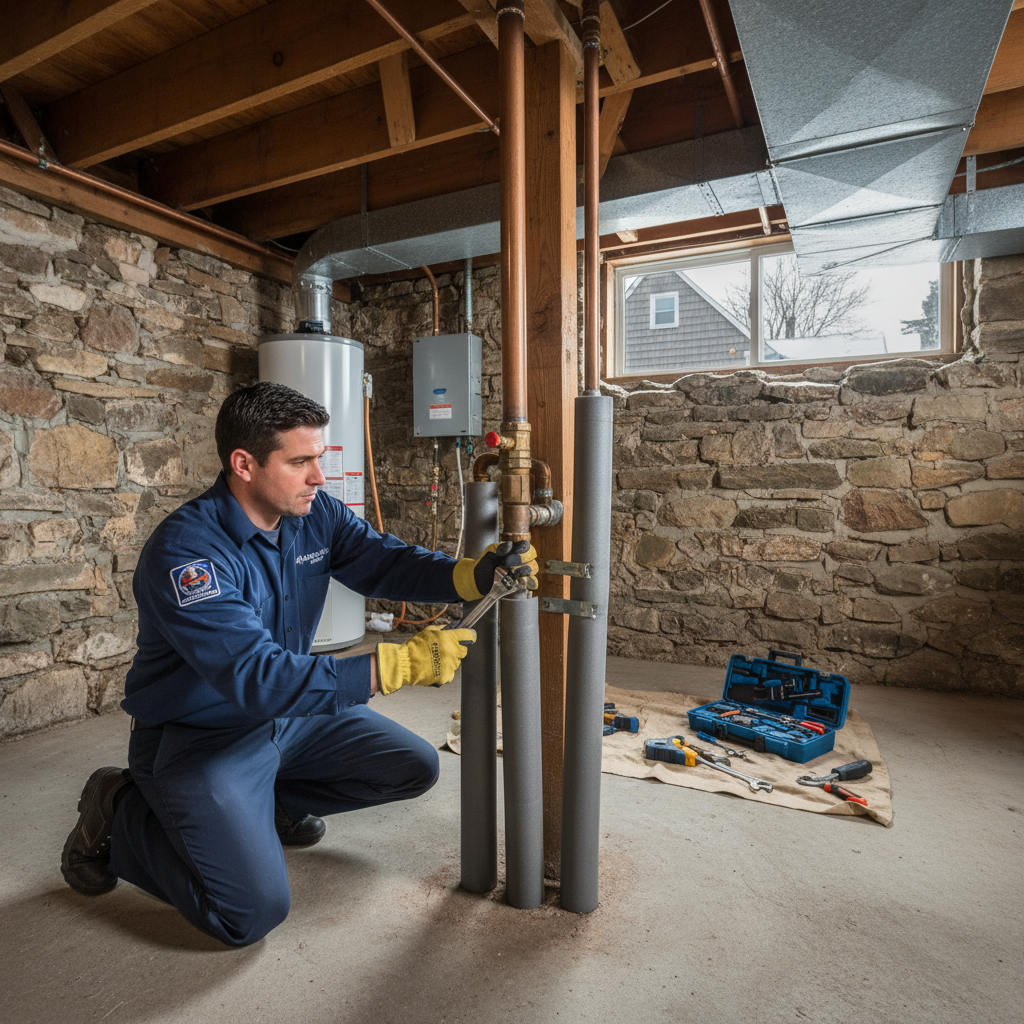
To prevent frozen pipes in Long Island homes, keep your thermostat set to at least 55°F, insulate exposed pipes in unheated areas like basements or crawlspaces, and seal air leaks near plumbing. During extreme cold snaps, allow a thin trickle of water to run from faucets served by exterior walls and keep under-sink cabinet doors open to circulate warm air.
Why Pipes Freeze and the Risks Involved
When water freezes, it expands by approximately 9% in volume. In a closed plumbing system, this expansion creates immense pressure that the metal or plastic pipe cannot contain, leading to a rupture.
Common Causes of Frozen Pipes:
- Sudden temperature drops: Rapid plunges in temperature often catch homeowners off guard.
- Poor insulation: Pipes located in attics, crawlspaces, or against outside walls are most vulnerable.
- Drafts: Small gaps in the home’s exterior allow freezing air to blow directly onto plumbing lines.
Risks of Pipe Bursts:
- Structural Damage: Water can weaken flooring, drywall, and support beams.
- Mold Growth: Even a small leak from a frozen crack can lead to significant mold issues within 24-48 hours.
- High Repair Costs: Remediating water damage is significantly more expensive than preventative maintenance.
The Long Island Context
Homeowners in Nassau County, Suffolk County, and parts of NYC face a unique set of challenges during the winter. Long Island’s housing stock features many older homes built before modern insulation standards were established. Many North Shore homes have deep basements that are difficult to heat, while South Shore homes may have pipes exposed in crawlspaces due to high water tables.
Furthermore, Long Island’s coastal climate means high humidity and "wet cold," which can accelerate the freezing process when polar vortex events push temperatures into the single digits. Local municipalities often utilize varying water main depths, making some residential service lines more susceptible to ground frost than others.
Homeowner Guidance: DIY vs. Professional Help
What You Can Do Safely:
- Insulate: Wrap accessible pipes with foam sleeves or fiberglass insulation.
- Drain Outdoor Lines: Disconnect garden hoses and shut off the internal valve to outdoor spigots (silcocks).
- Manage Airflow: Open cabinet doors under kitchen and bathroom sinks to let household heat reach the pipes.
- Seal Gaps: Use caulk or spray foam to seal holes where pipes enter through exterior walls.
When to Call a Licensed Plumber:
- No Water Flow: If you turn on a faucet and nothing comes out, the pipe is likely already frozen. Do not attempt to thaw it with an open flame or blowtorch.
- Visible Cracks: If you see a bulge or a crack in a pipe, call a professional immediately before it thaws and begins leaking.
- Persistent Cold Spots: If certain rooms are consistently colder than others, a plumber can help reroute pipes to safer, warmer interior locations.
From a Long Island Plumber’s Perspective
In our experience servicing homes from Hempstead to Montauk, we find that the most common culprit isn't just the cold—it's the wind. A small gap in the siding or a missing piece of basement window trim can act like a wind tunnel, freezing a pipe even if the ambient room temperature is 60 degrees. We always recommend a 'walk-around' every November to check for these small air leaks before the first freeze hits.
Professional Assistance
Protecting your home from winter weather is a vital part of property ownership in New York. If you are concerned about your plumbing's winter readiness or suspect a pipe has already frozen, contacting a licensed Long Island plumber is the safest way to prevent catastrophic water damage and ensure your system is up to local building codes.